Window material comparison
Timber vs uPVC Windows in Malta: Which Is Better?
If you're replacing windows in Malta, modern engineered timber and uPVC are both possible routes. The right choice depends on your property, planning context, comfort goals and budget.
A useful comparison starts with four questions:
- Initial cost
- Routine maintenance
- Planning and appearance
- Long-term value
Technical specifications
These are the standard specification options used as the starting point for a Heritage Apertures estimate. The final recommendation depends on the complete opening, property and project requirements.
- Frame profile and glazing basis
- 68 mm wood frame + 32 mm triple glazing is the standard, lower-cost basis. 78 mm wood frame + 42 mm triple glazing is the higher-cost upgrade for stronger soundproofing and insulation.
- Compatibility
- A 68 mm wood frame supports glazing up to 32 mm, including 32 mm double or triple glazing. A 78 mm wood frame supports glazing up to 42 mm; 42 mm triple glazing requires 78 mm.
- Timber options (wood species)
- Oak or Mahogany.
- Glazing and glass finish
- Double or Triple glazing with Clear or Frosted glass.
- Performance options
- Swisspacer thermal edging, plus Acoustic, Security or no performance glass.
- Default estimate basis
- Triple glazing with sun protection and sound/acoustic protection. If no frame profile is chosen, the estimate basis is 68 mm wood frame + 32 mm triple glazing. These are defaults, not customer-confirmed selections.
- Default opening basis
- Inward-opening tilt and turn. Units wider than about 600 mm are usually split left and right; viewed from inside, the right sash is usually the primary opener.
Modern Timber Windows
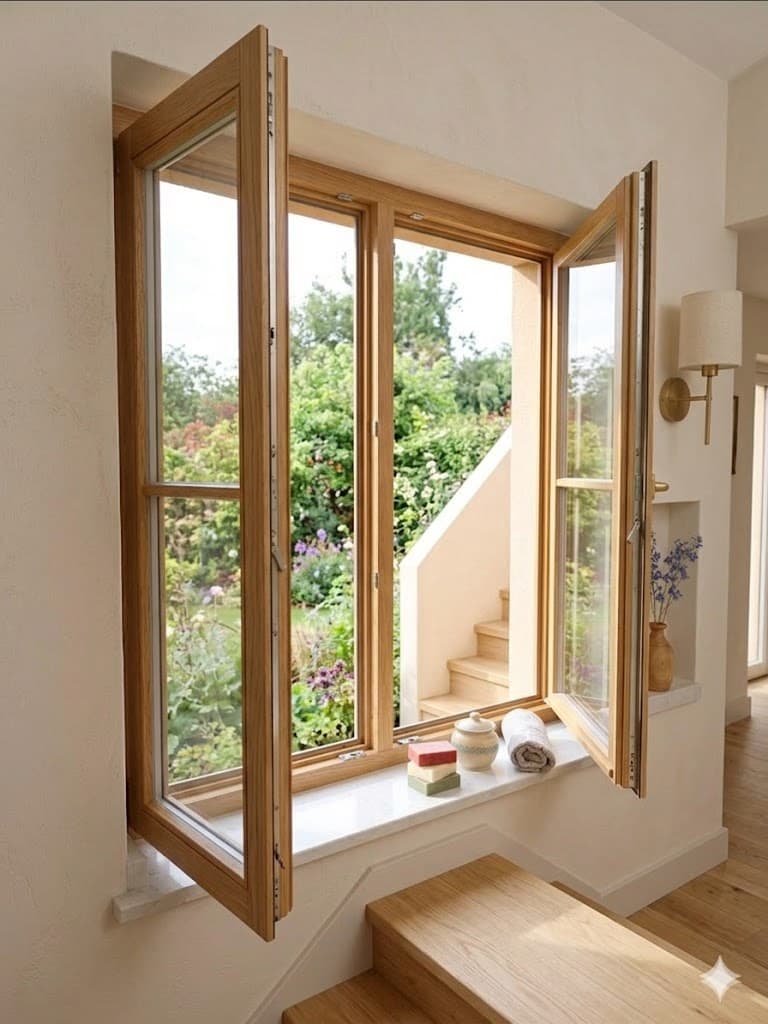
Modern engineered timber windows use stable laminated frames with high-performance double or triple glazing and premium European hardware.
They are particularly suited to homeowners who want the character of real wood, a repairable product and a window design that works with many heritage properties.
Advantages
- Traditional appearance with natural or painted finishes
- Excellent thermal insulation when correctly specified
- Repairable and refinishable
- Suitable for many UCA and heritage properties
- Long service life with proper maintenance
uPVC Windows
uPVC windows can be a practical option where low routine maintenance and a lower initial purchase price are the main priorities.
Their suitability depends on the property, the profile design, the glazing specification and any planning or heritage requirements that apply.
Advantages
- Usually lower initial purchase cost
- Low routine maintenance
- Available with modern double or triple glazing
- Good thermal performance when correctly specified
Points to check
- Whether the profile suits the character of the property
- Whether planning requirements allow the proposed appearance
- The quality of the seals, hardware and installation
- What can be repaired if a frame or finish is damaged
Comparison
| Feature | Modern Timber | uPVC |
|---|---|---|
| Lower initial purchase price? | No | Yes |
| Minimal routine maintenance? | No | Yes |
| Traditional appearance without a wood-effect finish? | Yes | No |
| Repairable and refinishable? | Yes | No |
| Often planning-friendly for UCA or heritage properties? | Yes | No |
| High thermal insulation when correctly specified? | Yes | Yes |
Which Material Is Right For You?
Choose uPVC when the lowest initial cost and minimal routine maintenance matter most and the proposed design is suitable for the property.
Choose engineered timber when traditional appearance, planning sensitivity, repairability and long-term value matter more than the lowest purchase price.
UCA and heritage decisions are property-specific. A material comparison cannot replace advice from the appointed architect or the relevant authority.
Timber vs uPVC FAQs
Common questions comparing engineered timber and uPVC window performance and longevity:
How often do modern engineered timber windows need repainting?
Unlike traditional softwoods that needed sanding every few years, our engineered timber windows use multi-layer, breathable microporous factory coatings. In Mediterranean conditions, light maintenance or overcoating is typically only needed after 8–12+ years on exposed elevations, and simple cleaning preserves the finish.
How does uPVC perform in intense Mediterranean sun and heat?
While uPVC requires little routine painting, prolonged exposure to high UV and seasonal heat cycles can cause plastic frames to expand, warp, or yellow over 15–20 years. Colored or dark foil wraps can also suffer heat distortion. Engineered timber remains structurally stable across extreme temperature swings.
Are uPVC windows allowed in Urban Conservation Areas (UCAs)?
Generally, no. Planning authorities in Maltese UCAs and heritage-sensitive zones typically mandate traditional wooden apertures to preserve architectural authenticity. Engineered timber windows meet strict heritage guidelines while incorporating modern thermal and acoustic glazing.
What happens if a timber or uPVC window frame gets scratched or damaged?
Timber is fully repairable—scratches, dents, or finish blemishes can be filled, sanded, and repainted locally without removing the aperture. Damaged uPVC profiles or peeling foil wraps cannot easily be restored and often require full sash or frame replacement.